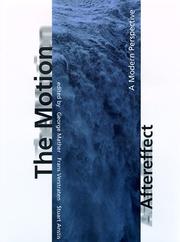
An edition of The motion aftereffect (1998)
The motion aftereffect
a modern perspective
By George Mather,S. M. Anstis
Publish Date
1998
Publisher
The MIT Press
Language
eng
Pages
234
Description:
Motion perception lies at the heart of the scientific study of vision. The motion aftereffect (MAE), probably the best-known phenomenon in the study of visual illusions, is the appearance of directional movement of a stationary object or scene after the viewer has been exposed to visual motion in the opposite direction. For example, after one has looked at a waterfall for a period of time, the scene beside the waterfall may appear to move upward when one's gaze is transferred to it. Although the phenomenon seems simple, research has revealed surprising complexities in the underlying mechanisms and offered general lessons about how the brain processes visual information. In the last decade alone, more than 200 papers have been published on MAE, largely inspired by improved techniques for examining brain electrophysiology and by emerging new theories of motion perception. The contributors to this volume are all active researchers who have helped to shape the modern conception of MAE.
subjects: Neuropsychology, Motion perception (Vision), After-images, Cognition, Motion Perception, Afterimage, Psychophysiology, Ocular Physiological Phenomena, Visual Perception, Perception, Physiology, Phenomena and Processes, Behavioral Sciences, Mental Processes, Behavioral Disciplines and Activities, Biological Science Disciplines, Psychological Phenomena and Processes, Psychiatry and Psychology, Natural Science Disciplines, Disciplines and Occupations, Perception visuelle du mouvement, Neuropsychologie, Images consécutives, MEDICAL, Neuroscience, PSYCHOLOGY, Bewegingsnaëffecten, Human Anatomy & Physiology, Health & Biological Sciences