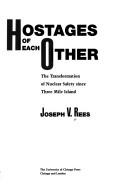
An edition of Hostages of each other (1994)
Hostages of each other
the transformation of nuclear safety since Three Mile Island
By Joseph V. Rees
Publish Date
1994
Publisher
University of Chicago Press
Language
eng
Pages
242
Description:
Early in the morning of March 28, 1979, several water pumps stopped working at a nuclear plant near Harrisburg, Pennsylvania, setting in motion the chain of events that would make Three Mile Island an indelible symbol of disaster for the American public - and would utterly transform the nation's nuclear regulatory system. Hostages of Each Other is the first book to penetrate the silence surrounding this extraordinary transformation. Taking us behind the scenes of nuclear power, Joseph Rees offers us a close and fascinating look at the dramatic change in the industry's safety standards, operation, and management in the wake of Three Mile Island. Drawing on extensive empirical research, including well over one hundred interviews, Rees depicts the appalling state of nuclear safety practices before disaster shook the industry into action. In his account of the aftermath, a little-known organization - the Institute of Nuclear Power Operations (INPO) - emerges as a powerful force for change. Created by top nuclear industry executives soon after the Three Mile Island accident, this highly secretive organization appears here as the prime mover behind recent improvements in nuclear safety, with the Nuclear Regulatory Commission playing only a secondary role. Tracing the INPO's origins and its functions, Rees details how, contrary to conventional wisdom, industry self-regulation can be remarkably effective. As Three Mile Island demonstrates, an accident at any plant can catastrophically affect the entire industry - each plant's license falls hostage to the safety standards of the other plants. Placing the incident at Three Mile Island in a larger conceptual framework, Rees develops a theory of communitarian regulation that has implications far beyond the nuclear industry. For those who think that industry self-regulation is invariably weak and ineffective, this account of an internal organization marked by professionalism and a strong sense of institutional responsibility is sure to be a revelation. It will alter thinking about regulatory issues and inform ongoing debate over nuclear power.
subjects: Institute of Nuclear Power Operations (U.S.), Nuclear industry, Nuclear power plants, Rules and practice, Safety measures, United States, Kernreaktorsicherheit, Institute of Nuclear Power Operations, Safety regulations, Kerntechnische Industrie, Sicherheit, Reaktorunfall, Nuclear reactors, safety measures, HEALTH & FITNESS, Safety
Places: Safety regulations, United States