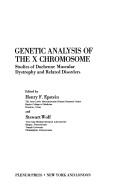
An edition of Genetic Analysis of the X Chromosome (Advances in Experimental Medicine and Biology, 154) (1982)
Genetic Analysis of the X Chromosome (Advances in Experimental Medicine and Biology, 154)
By Henry F. Epstein
Publish Date
November 1, 1982
Publisher
Springer
Language
eng
Pages
203
Description:
The present volume contains the edited transcript of a colloquium sponsored by the Muscular Dystrophy Association and held at Mountain Shadows Inn, Scottsdale, Arizona, December 14-16, 1981. The participants, geneticists, molecular biologists, biochemists and clinicians, explored in open dialogue ways and means of identifying and characterizing the genetic alterations responsible for X-linked muscular dystrophies, especially the Duchene type. The clinicians, who urged the use of properly diagnosed and documented case material for study, emphasized the troublesome fact that the primary phenotypic expression of the gene (or genes) involved in the muscular dystrophies is yet to be identified. Discussions centered on the applicability of recent methodological advances in DNA chemistry and molecular biology, cytogenetics and cell biology to mapping the X chromosome. Despite ignorance of the basic disorder in the muscular dystrophies, DNA technologies and chromosome mapping strategies for the discovery of genetic defects and phenotypic expressions were proposed. Beyond its stimulating intellectual exchange, the colloquium yielded important benefits. The participants agreed to share needed cell lines and endonuclease restriction enzymes and to organize interlaboratory communication and collaborative efforts to accelerate progress in the quest for the genetic lesion in Duchenne muscular dystrophy. Discussions centered on the applicability of recent methodological advances in DNA chemistry and molecular biology, cytogenetics and cell biology to mapping the X chromosome. Despite ignorance of the basic disorder in the muscular dystrophies, DNA technologies and chromosome mapping strategies for the discovery of genetic defects and phenotypic expressions were proposed. Beyond its stimulating intellectual exchange, the colloquium yielded important benefits. The participants agreed to share needed cell lines and endonuclease restriction enzymes and to organize interlaboratory communication and collaborative efforts to accelerate progress in the quest for the genetic lesion in Duchenne muscular dystrophy.