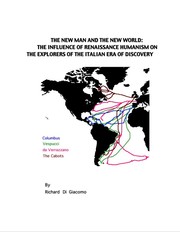
An edition of THE NEW MAN AND THE NEW WORLD (1994)
THE NEW MAN AND THE NEW WORLD
THE INFLUENCE OF RENAISSANCE HUMANISM ON THE EXPLORERS OF THE ITALIAN ERA OF DISCOVERY
By Richard Di Giacomo
Publish Date
1994
Publisher
Magnifico Publications
Language
eng
Pages
124
Description:
The collective discoveries of Christopher Columbus, Amerigo Vespucci, John and Sebastian Cabot, and Giovanni da Verrazzano constitute a distinct Italian Era of Discovery which laid the groundwork for all other voyages which followed. The Italian discoverers deserve a place alongside the well-known Humanists in the history of art, literature, philosophy, and government by virtue of their research and accomplishments. The explorers also made original contributions to the fields of science, navigation and cartography. The world view of the Italian explorers evolved to include the concept of a new world. They had to reevaluate their cosmography and change the maps to reflect their new knowledge. The concept of a New World was equally profound as that of a new age. The most important contribution of the Italian explorers was not what they found, but the change in thinking that took place when they tried to explain their discoveries.
subjects: Columbus, Vespucci, Cabot, da Verrazano, explorers, Renaissance, Italian history, Renaissance humanism, discoverers
People: Columbus, Vespucci, Cabot, da Verrazano
Places: Italy, Spain, Hispaniola, America
Times: Renaissance