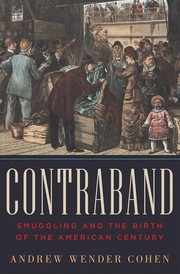
An edition of Contraband (2015)
Contraband
smuggling and the birth of the American century
By Cohen, Andrew Wender
Publish Date
2015
Publisher
W. W. Norton & Company
Language
eng
Pages
402
Description:
How skirting the law once defined America's relation to the world. In the frigid winter of 1875, Charles L. Lawrence made international headlines when he was arrested for smuggling silk worth $60 million into the United States. An intimate of Boss Tweed, gloriously dubbed "The Prince of Smugglers," and the head of a network spanning four continents and lasting half a decade, Lawrence scandalized a nation whose founders themselves had once dabbled in contraband. Since the Revolution itself, smuggling had tested the patriotism of the American people. Distrusting foreign goods, Congress instituted high tariffs on most imports. Protecting the nation was the custom house, which waged a "war on smuggling," inspecting every traveler for illicitly imported silk, opium, tobacco, sugar, diamonds, and art. The Civil War's blockade of the Confederacy heightened the obsession with contraband, but smuggling entered its prime during the Gilded Age, when characters like assassin Louis Bieral, economist "The Parsee Merchant," Congressman Ben Butler, and actress Rose Eytinge tempted consumers with illicit foreign luxuries. Only as the United States became a global power with World War I did smuggling lose its scurvy romance. Meticulously researched, Contraband explores the history of smuggling to illuminate the broader history of the United States, its power, its politics, and its culture. -- Provided by publisher. An assessment of the role of smuggling in establishing American foreign relations traces the activities of illicit importer Charles L. Lawrence against the backdrop of the Civil War, changing views on patriotism, and Congressional tariffs on foreign luxuries. -- Provided by publisher.
subjects: Commerce, Schmuggel, Handel, Innenpolitik, Smuggling, Blockade, Luxusgut, History, United states, commerce
Places: United States