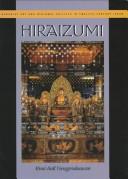
An edition of Hiraizumi (1998)
Hiraizumi
Buddhist Art and Regional Politics in Twelfth-Century Japan (Harvard East Asian Monographs)
By Mimi Hall Yiengpruksawan
Publish Date
January 15, 1999
Publisher
Harvard University Asia Center
Language
eng
Pages
319
Description:
"In the twelfth century, along what were then the borders of the Japanese state in northern Honshu, three generations of local rulers built a capital city at Hiraizumi that became a major military and commercial center. Known as the Hiraizumi Fujiwara, these local powerholders were descendents of the ancient Emishi, for centuries rivals to the central Japanese state and only recently reluctant participants in the growing Japanese polity. At Hiraizumi, these rules created a city filled with art, from splendid temples and shrines to landscaped gardens and palatial residences that rivaled in scale and extravagance those found in Kyoto. This building program was at least in part an attempt to use the power of art and architecture to claim a religious and political mandate. At the same time, it was an encounter with a set of concerns that arose from the situation of the Hiraizumi Fujiwara as outsiders in an emergent cultural homogeneity defined by the center in Kyoto." "In this, the first book-length study of Hiraizumi in English, Mimi Hall Yiengpruksawan studies the history of the region and the rise of the Hiraizumi Fujiwara and analyzes their remarkable program of construction."--BOOK JACKET.