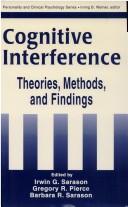
An edition of Cognitive interference (1996)
Cognitive Interference
Theories, Methods, and Findings (Lea Series in Personality and Clinical Psychology)
By Irwin G. Sarason,Gregory R. Pierce,Barbara R. Sarason
Publish Date
January 1, 1996
Publisher
Lawrence Erlbaum
Language
eng
Pages
448
Description:
Cognitive interference refers to the unwanted and often disturbing thoughts that intrude on a person's life. Mounting evidence in a number of areas has shown that cognitive interference plays an important role in stress, poor performance, slow learning, social maladjustment, psychopathology, and behaviors resulting in accidents. The empirical evidence of cognitive interference is impressive, yet it is also scattered across several disciplines that often do not communicate with one another. This book synthesizes and integrates work on cognitive interference. It reviews the major types of interfering thoughts, how they are assessed, the mechanisms by which they influence behavior, and their theoretical and practical significance. . The chapter authors of this cohesive and integrated volume are among the leading researchers, theorists, and clinicians in the study of various types of unwanted thoughts. Aimed at researchers and practitioners whose efforts are directed at understanding cognitive interference, the book is organized into three sections: theoretical analyses of cognitive interference, the book is organized into three sections: theoretical analyses of cognitive interference, the role of cognitive interference in influencing performance and social behavior, and the pervasive and debilitating manifestations of cognitive interference that clinicians treat.