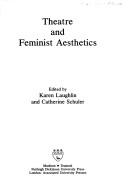
An edition of Theatre and Feminist Aesthetics (1995)
Theatre and feminist aesthetics
By Karen Louise Laughlin,Catherine Schuler
Publish Date
1995
Publisher
Fairleigh Dickinson University Press,Associated University Presses
Language
eng
Pages
331
Description:
Theatre and Feminist Aesthetics joins in the ongoing debate about feminist aesthetics by asking how the politics and practice of feminism have changed the face of the theatre and might continue to do so. Reflecting the diversity of modern feminism, the sixteen essays collected in this volume are themselves diverse - both in their approaches and in the aspects of theatre practice they address. Along with comments on the work of familiar figures such as Caryl Churchill, Marsha Norman, and Lorraine Hansberry, they acknowledge less frequently-heard voices of a wide range of playwrights, theatre groups, directors, designers, and performers, including the Theatre Experimental de Montreal, Caribbean playwright Simone Schwarz-Bart, and Russian playwright Zinaida Gippius, as well as directors Joan Littlewood and Buzz Goodbody. The aim is not to create a new canon of feminist theatre practitioners but rather to broaden our perspective on the many facets of feminist theory appropriated, tested, or invented in the theatre. These essays extend, reinforce, and often challenge one another in their views of the possibility or even the desirability of articulating feminist aesthetics conceived as such. The explorations of theatrical questions as well as specific productions make the volume a valuable source book for directors, designers, and other theatre practitioners. While recognizing that feminism's relationship to established theatre institutions remains precarious, the essays in Theatre and Feminist Aesthetics provide ample evidence that feminism has already had an impact on the theatre. And they demonstrate the potential of theatre - as a form of feminist practice - to embody questions of gender, race, and class, and to open up spaces where multiplicity and diversity can be affirmed.