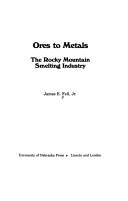
An edition of Ores to metals (1979)
Ores to metals
the Rocky Mountain smelting industry
By James E. Fell
Publish Date
1979
Publisher
University of Nebraska Press
Language
eng
Pages
347
Description:
Smelters played an important role in the minerals industry of the American West. They rose, flourished, and died in symbiosis with the mines they served. Yet they have not so far received the attention given to the more glamorous and picturesque story of gold and silver lodes. In this book James E. Fell, Jr., sets out to remedy the neglect. He writes about the people, the technologies, and the business decisions that shaped the smelting industry in the Rocky Mountains. He talks of men unknown today, like Nathaniel P. Hill, a professor of chemistry at Brown University, and James B. Grant, a mining engineer of southern origins. He also talks of people still renowned, men like Meyer Guggenheim and his seven sons, and John D. Rockefeller. The smelters of Colorado appeared in the 1860s when miners desperately needed a technology that could recover gold and silver from ores resistant to milling.^ Once begun, the industry evolved from one composed of several hundred small ventures reducing ores in isolated mining camps to one composed of several large, integrated firms operating in major urban centers--Leadville, Denver, Pueblo, and Durango. A long series of mergers finally culminated with the formation of the American Smelting and Refining Company (ASARCO). The industry was typical of big business in the Gilded Age. Vertical and horizontal integration, the increased use of capital, the creation of urbanized labor forces, the quest for technological advance, and the rationalization of production were just as marked in this business as they were in petroleum, steel, copper, and many lines of manufacturing. Yet the smelting industry was unique in itself, and its evolution showed that the development of western mineral resources depended largely on the adaptation of European technology and the mobilization of eastern capital.^ Drawing heavily on archival materials, Fell vividly presents the troubles and triumphs of the entrepreneurs who built up one of the great industries of the West. He shows how these men adjusted to competition, how they exploited new opportunities, and how they coped with changing ore markets. His book fills a large void in the history of the mining west.
subjects: History, Mineral industries, Smelting, Drama, Neo-Nazis, Skinheads, Hate crimes, Brothers, Rocky mountains, Industries
Places: Rocky Mountains Region