An edition of Growth in a Traditional Society (1996)
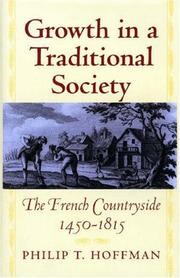
Growth in a traditional society
the French countryside, 1450-1815
By Philip T. Hoffman
Publish Date
1996
Publisher
Princeton University Press
Language
eng
Pages
370
Description:
Making a strong case for the use of economic analysis in studying history and culture, Philip Hoffman shatters the widespread myth that traditional agricultural societies in early modern Europe were socially and economically stagnant - and ultimately depended on wide-scale political revolution for their growth. Through a richly detailed historical investigation of the peasant agriculture of ancien-regime France, the author uncovers evidence that requires a new understanding of what constituted economic growth in such societies. His arguments rest on a measurement of long-term growth that enables him to analyze the economic, institutional, and political factors that explain its forms and rhythms. . In comparing France with England and Germany, Hoffman arrives at fresh answers to some classic questions: Did French agriculture lag behind farming in other countries? If so, did the obstacles in French agriculture lurk within peasant society itself, in the peasants' culture, in their communal property rights, or in the small scale of their farms? Or did the obstacles hide elsewhere, in politics, in the tax system, or in meager opportunities for trade? The author discovers that growth cannot be explained by culture, property rights, or farm size, and argues that the real causes of growth derived from politics and gains from trade. By challenging other widely held beliefs, such as the nature of the commons and the workings of the rural economy, Hoffman offers a new analysis of peasant society and culture, one based on microeconomics and game theory and intended for a wide range of social scientists.