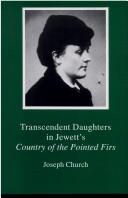
An edition of Transcendent daughters in Jewett's Country of the pointed firs (1994)
Transcendent daughters in Jewett's Country of the pointed firs
By Joseph Church
Publish Date
1994
Publisher
Fairleigh Dickinson University,Associated University Presses
Language
eng
Pages
202
Description:
Sarah Orne Jewett's quasi-autobiographical The Country of the Pointed Firs (1896) offers the account of a middle-aged writer's undergoing a sort of midlife crisis, attempting a productive retreat in rural Maine, and finally achieving renewal by way of a deepening intimacy with the remote region and its archaic people. As critics have observed, the narrator establishes particularly salutary relations with several powerful older women and thus in Jewett's handling can be seen to symbolize a troubled daughter endeavoring to regain the vital mother. However, commentators have generally failed to see that the daughter-narrator's developing relations with maternal figures follows upon and appears a consequence of her having developed intimate associations with several elderly men. Within her drama, these latter function as complex paternal figures. Adopting a psychoanalytic approach, Joseph Church's Transcendent Daughters proposes that the narrator's venture among these people in fact allegorizes an anxious daughter's return to familial origins and dramatizes her reengagement with and effort to transcend unconscious constituents of the self established during early maturation, specifically androgynous composites of an internalized hostile mother and idealized father that now severely constrict her world, most of all, her access to beneficent women.