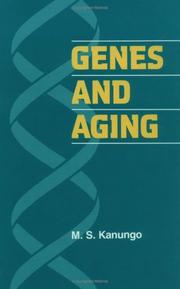
An edition of Genes and aging (1994)
Genes and aging
By M. S. Kanungo
Publish Date
1994
Publisher
Cambridge University Press
Language
eng
Pages
329
Description:
The maximum life span of multicellular organisms varies greatly: for a fruitfly it is about 30 days, for a dog about 20 years, and for a human about 100 years. Despite these differences, all animals show a similar pattern in their life spans - growth, adulthood, and aging, followed by death. The basic cause of aging in multicellular organisms (eukaryotes) lies at the level of the genes, although nutrition and various types of stresses do influence the rate and pattern of aging. This book reviews the molecular biology of the gene in relation to aging. Until about a decade ago it was not possible to probe into the types of changes that occur in eukaryotic genes, due to their enormous complexity The use of genetic engineering techniques, however, is beginning to unravel the changes that occur in the genes as an organism ages: such as the changing expression of specific genes under normal conditions and under various types of stress, the changes in the regulatory roles of the sequences in the promoter regions of genes, conformational changes that may occur in genes during aging, and the protein factors that are involved in the aging process.
subjects: Aging, Cells, Genetic aspects, Genetic aspects of Aging, Genetics, Aspect genetique, Cellule, Genetique, Genetik, Physiologie, Veroudering (biologie, psychologie), Vieillissement, Altern, Zelle, Senescence, Genen, Cellules eucaryotes, Cellules, Vieillissement de la cellule, Aging, genetic aspects, Cellular Senescence, Eukaryotic Cells, Physiology, Molecular Biology, Gene Expression