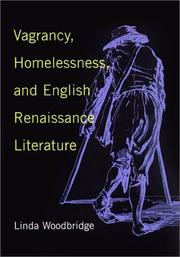
An edition of Vagrancy, homelessness, and English Renaissance literature (2001)
Vagrancy, homelessness, and English Renaissance literature
By Linda Woodbridge
Publish Date
2001
Publisher
University of Illinois Press
Language
eng
Pages
338
Description:
"The vagrant poor of Renaissance England have acquired a patina of comic good humor and a reputation as sturdy rogues who were adept at living on the fringes of society. Unearthing the sources as well as the effects of this reputation, Linda Woodbridge shows that the prevailing image of the vagrant poor was essentially a literary fabrication pressed into the service of specific social and political agendas.". "Looking at texts such as Thomas Harman's influential Caveat for Common Cursetors, Vulgarly Called Vagabonds, Till Eulenspiegel's A Man Called Howlglas, and Walter Smith's Twelve Merry Jests of the Widow Edith, Woodbridge identifies a well-established literary tradition of treating vagrants as comic figures. This literary practice, she maintains, has informed both the legal and the historical treatment of vagrancy, erasing pity and compassion for the homeless by depicting them as robust, resourceful, conniving tricksters. Her study culminates in a close look at one literary work that does invoke compassion for the homeless, placeless poor: Shakespeare's King Lear."--BOOK JACKET.
subjects: Rogues and vagabonds in literature, History and criticism, Homeless persons in literature, Vagrancy in literature, English literature, Renaissance, Homelessness in literature, English literature, history and criticism, early modern, 1500-1700, Renaissance, england
Places: England
Times: Early modern, 1500-1700