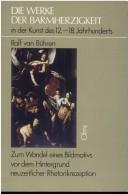
An edition of Die Werke der Barmherzigkeit in der Kunst des 12.-18. Jahrhunderts (1998)
Die Werke der Barmherzigkeit in der Kunst des 12.-18. Jahrhunderts
zum Wandel eines Bildmotivs vor dem Hintergrund neuzeitlicher Rhetorikrezeption
By Ralf van Bühren
Publish Date
1998
Publisher
G. Olms
Language
ger
Pages
557
Description:
The author deals with the changes in the iconography of the “works of mercy” against the backdrop of the humanistic reception of rhetorics. Giving food to the hungry, drink to the thirsty, shelter to strangers and clothes to the naked, visiting prisoners and the sick as well as burying the dead - the significance of this cycle of virtues (Last Judgement, Matthew 25, 31-46) for how to handle poverty and wealth developed into an important moral doctrine of the Middle Ages and the Modern Age. Accordingly, the subject of mercy became widespread in art. This is the first comprehensive monograph to deal with the iconographic motif, based on around 250 images focusing on the 16th and 17th centuries in the Netherlands and Germany and includes examples from Italy and France. The book clarifies the gradual change from the medieval iconography with regard to audience, client and artist. Although economic and religious changes continued to have an influence on the “works of mercy” in the Modern Age, it was principally rhetorics and art theory which developed a persuasive mode of representation: personal reference to the observer and narrative style. The historical lines of development dealt with in the text section are supplemented by a catalogue with 96 numbers which serves as a summary. The volume is completed by a detailed subject index, an index of names and a section with plates showing the most important representations of the “works of mercy”.
subjects: Bible, Catholic Church, Christian art and symbolism, Corporal works of mercy in art, Dutch Art, France, German Art, Germany, Italy, Last Judgement, Middle Ages, Modern Age, Netherlands, Reformation, Themes, motives, art, art theory, history of economics, history of religion, iconography, moral doctrine, painting, rhetorics, sacred art, sculpture, works of mercy
People: Caravaggio, David Teniers, Dirck Volckertsz Coornhert, Federico Zuccari, Frans Francken, Georg Pencz, Hans Mielich, Hans Ruprecht Hoffmann, Hendrick Goltzius, Ignatius of Loyola, Jan Stehen, Johann Baptist Klauber, John Calvin, Joost Cornelisz Droochsloot, Martin Luther, Michael Sweerts, Nikolaus Gottfried Stuber, Petrus Canisius, Pieter Bruegel, Quintilian, Sebastian Vrancx, Sébastien Bourdon
Places: Germany, Netherlands