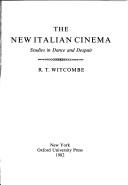
An edition of The new Italian cinema (1982)
The new Italian cinema
studies in dance and despair
By R. T. Witcombe
Publish Date
1982
Publisher
Oxford University Press
Language
eng
Pages
294
Description:
This volume examines the development of Italian motion pictures from 1960 to the 1970s. The author analyzes the films of various Italian directors, including Fellini, Antonioni, and Bertolucci. In the 1960s, Italian directors began to deviate from the tenets of neorealism, creating autobiographical, fantastical, and mythical films that unabashedly celebrated the artistic imagination. These filmmakers turned their attention away from the urban and rural poor and toward the alienation of the cosmopolitan middle and upper classes. What was lost in political content was gained in stylistic innovation: films of the period featured groundbreaking uses of symbolic mise-en-scène, allegorical narratives, elliptical editing, and expressive cinematography. Key films include Michelangelo Antonioni's L'Avventura (1959), Federico Fellini's La Dolce Vita (1960), Pier Paolo Pasolini's Teorema (1968), and Bernardo Bertolucci's The Conformist (1970).