An edition of Mammy (2007)
Mammy
A Century of Race, Gender, and Southern Memory
By Kimberly Gisele Wallace-Sanders,Kimberly Wallace-Sanders
Publish Date
December 28, 2007
Publisher
University of Michigan Press
Language
eng
Pages
196
Description:
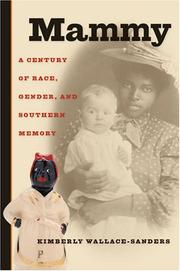
Her bright eyes and jolly face gaze upon us from the covers of old cookbooks, syrup bottles, salt and pepper shakers, and cookie jars. She is a prominent figure in literature, movies and folk art. She is Mammy. But who is Mammy, and where did she come from? And why is she nearly always represented as a large, dark woman with a sonorous and soothing voice, raucous laugh, infinite patience, self-deprecating wit, and implicit understanding and acceptance not only of the world at large but of her inferiority and devotion to whites? In truth, Mammy is, as most stereotypes turn out to be, much more complicated than is assumed. In this groundbreaking study, author Kimberly Wallace-Sanders presents the first integrated approach to the story of Mammy. The author traces the literary and cultural evolution of the mammy figure through historical periods that correspond to principal phases in America's racial consciousness. This framework sheds new light on what the figure of the black mammy symbolized at various historical moments, and how her figure looms over the American imagination, a cultural influence so pervasive that only this kind of comprehensive and integrated approach can do it justice. A rich array of illustrations traces cultural representations of the mammy figure from the nineteenth century to the present, as she has been depicted in advertising, commercial and book illustrations, kitchen figurines, dolls--and in more contemporary reframings by artists including Andy Warhol, Betye Saar, Michael Ray Charles, and Joyce Scott.
subjects: American literature, History and criticism, Women household employees in literature, African American women in literature, In literature, Stereotypes (Social psychology) in literature, African American women in popular culture, History, Racism in popular culture, Women domestics in literature, Women household employees
People: Jemima Aunt
Places: United States, Southern States
Times: 20th century